
When the term “microservices” first entered the mainstream, most teams were wrestling with how to split a monolith into independent services. Six years later, the conversation has shifted from "how to adopt" to "how to evolve." The cloud‑native toolbox has matured, standards like OpenTelemetry and Service Meshes have reached stability, and AI‑assisted operations are no longer experimental. In this landscape, a handful of architecture patterns have emerged as the go‑to solutions for teams that need scalability, observability, and rapid iteration without sacrificing reliability.
1. The Service Mesh‑Enabled Domain‑Driven Design (SM‑DDD) Pattern
Domain‑Driven Design (DDD) has long been a strategic way to model business capabilities, but in 2026 it is most effective when paired with a mature service mesh (e.g., Istio, Linkerd, or the newer Open Service Mesh). The SM‑DDD pattern isolates each bounded context behind the mesh, letting the mesh provide traffic routing, mutual TLS, and fine‑grained observability without cluttering the business code.
Key ingredients:
- Sidecar proxies injected per service to offload cross‑cutting concerns.
- Canonical APIs (gRPC or HTTP/2) that match the domain language.
- Mesh policies that enforce bounded‑context contracts (e.g., rate‑limit per business unit).
Advantages include automatic retries, circuit breaking, and per‑domain metrics that let SREs spot a latency spike in the "Payments" domain before it ripples into "Orders." The pattern also eases progressive migration: you can drop a legacy monolith into the mesh, gradually replace bounded contexts with new services, and let the mesh handle the routing.

2. Event‑SourcedCQRS with Cloud‑Native Event Stores
In 2026, the combination of Event Sourcing and Command Query Responsibility Segregation (CQRS) has become a standard pattern for any system that demands auditability and eventual consistency at scale. What used to be a niche approach—historically built on bespoke Kafka topics—is now baked into managed services like Azure Event Hubs + Cosmos DB, AWS QLDB, or the open‑source Milvus‑based event store.
Why it matters now:
- Immutable logs provide a natural compliance trail, a requirement for GDPR‑type regulations that have tightened across the EU and US.
- Replayability lets you rebuild read models on the fly when a new analytical requirement appears.
- Scalable projections run as lightweight functions (e.g., Cloudflare Workers, AWS Lambda) that consume the event stream without impacting the write side.
Implementing this pattern in 2026 typically involves:
- Defining a command API that validates intent and publishes an event.
- Storing the event in a durable, ordered store with built‑in deduplication.
- Running one or more projection services that materialize read‑optimized views (SQL, NoSQL, or vector DB for AI‑enhanced search).
The result is a system that can survive partial outages, support time‑travel queries, and align naturally with modern observability stacks that already ingest trace data from the same event pipeline.
3. AI‑Augmented API Gateways (AI‑Gate)
API gateways have always been the front door for microservices, but in 2026 they are evolving into intelligent brokers. AI‑Augmented API Gateways (commonly abbreviated as AI‑Gate) embed LLM‑powered request classification, dynamic throttling, and automated contract validation.
Typical capabilities:
- Intent detection: an LLM interprets free‑form client payloads and routes them to the appropriate downstream service, reducing the need for a rigid CRUD contract.
- Dynamic SLA enforcement: the gateway predicts request cost (CPU, DB reads) in real‑time and adjusts rate limits on a per‑user basis.
- Self‑healing contracts: if a downstream service changes its OpenAPI spec, the AI‑Gate can suggest backward‑compatible adapters on the fly.
Because the AI component runs as a sidecar or as a managed “gateway‑as‑service,” latency impact is minimal—often sub‑10 ms per request. Teams that adopt AI‑Gate report a 30 % reduction in integration bugs and a smoother path to versioning APIs across multiple product lines.
4. Multi‑Cluster Federated Service Mesh (FC‑Mesh)
Enterprises that span multiple cloud providers or hybrid data centers can no longer rely on a single‑cluster mesh. The FC‑Mesh pattern extends the service mesh concept across clusters, enabling a single control plane to manage traffic, security policies, and observability across AWS, GCP, Azure, and on‑prem Kubernetes clusters.
Core components:
- Control plane federation: tools like Istio 2.5’s multicluster API or the newer Meshery‑Federation layer synchronize policies.
- Geo‑aware routing: traffic is directed to the nearest healthy cluster, reducing latency for global users.
- Unified telemetry: metrics from all clusters feed into a single pane (e.g., Grafana 10’s distributed data source).
Benefits include true disaster‑recovery—if one region goes down, the mesh seamlessly routes calls to another without code changes. Additionally, compliance teams love the ability to keep data residency guarantees while still exposing a unified API surface.
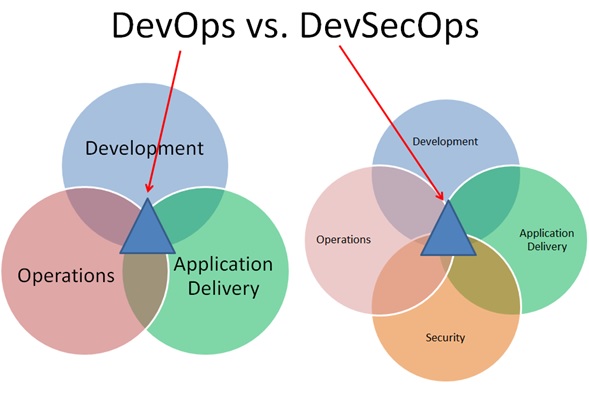
Image: DevOps vs DevSecOps Mginise — Mginise (CC BY-SA 4.0), via Wikimedia Commons
5. Serverless‑First Microservice Choreography
Serverless platforms have matured past the “functions as glue” stage. In 2026, many organizations design their microservice landscape around event‑driven choreography that lives entirely in serverless runtimes (e.g., AWS EventBridge + Lambda, Google Cloud Workflows, Azure Durable Functions).
Key traits:
- Stateless orchestration: a workflow engine defines the choreography, while each step is a single‑purpose serverless function.
- Pay‑per‑execution economics: you only pay for the exact time each step runs, making it attractive for bursty workloads.
- Built‑in retries and state persistence: the platform guarantees at‑least‑once delivery and persists interim state, eliminating custom saga patterns.
Teams adopt this pattern when they need rapid iteration and minimal ops overhead. The trade‑off is tighter coupling to a single cloud provider’s serverless ecosystem, which is mitigated by using open standards like CloudEvents and portable workflow definitions (YAML/JSON).
Bottom Line
Microservices are no longer just a way to break a monolith; they are an ecosystem of patterns that interact with each other. The Service Mesh‑Enabled DDD pattern gives you a secure, observable boundary for business domains. Event‑Sourced CQRS provides an immutable backbone for compliance and replayability. AI‑Augmented API Gateways turn your entry point into a smart broker, while Federated Service Meshes give you true global resilience. Finally, Serverless‑First choreography lets you iterate at lightning speed without managing servers.
Adopting these patterns doesn’t mean a wholesale rewrite. Start by mapping your existing services to the patterns that solve the most pressing pain points—be it latency, observability, or compliance—and evolve from there. The result is a microservice landscape that is future‑proof, developer‑friendly, and ready for the next wave of cloud‑native innovation.
Sources & References:
1. Istio Documentation – Multi‑Cluster Mesh (2025).
2. Martin Fowler – Event Sourcing and CQRS (2024 edition).
3. OpenAI API Blog – LLM‑Powered API Gateways (2025).
4. CNCF – Service Mesh Landscape 2026 Report.
5. AWS re:Invent – Serverless Orchestration Best Practices (2025).
Disclaimer: This article is for informational purposes only. Technology landscapes change rapidly; verify information with official sources before making technical decisions.