
When the microservice wave first crashed onto the software landscape a decade ago, the mantra was simple: break monoliths into independent services, ship faster, and scale on demand. Fast forward to 2026, and the conversation has shifted from “how do we split?” to “how do we orchestrate, secure, and evolve thousands of services reliably at planetary scale?” This post dives deep into the most significant microservices architecture patterns that have emerged—or matured—this year, offering concrete guidance for senior engineers tasked with turning theory into production‑grade systems.
1. Self‑Describing Contracts with API‑First Schemas
In early microservice adoptions, teams often treated REST endpoints as an after‑thought, leading to version drift and runtime surprises. The 2026 standard is an API‑First, self‑describing contract that lives in a version‑controlled registry (think OAS 3.1 combined with AsyncAPI for event streams). The pattern enforces three disciplines:
- Schema as source of truth: Every service publishes its request/response and event schemas to a central
Schema Registry. Consumers fetch the contract at build time, guaranteeing compile‑time compatibility. - Semantic versioning + compatibility matrix: A lightweight
compatibility matrixtracks which consumer versions can safely bind to which provider versions, automating CI checks. - Contract testing as gate: Tools like
PactorHoverflyrun contract verification in CI, blocking merges that would break downstream services.
Result: fewer runtime 500s, smoother rollout pipelines, and a shared language that bridges dev, QA, and operations.
2. Distributed Saga Orchestration with Event‑Driven Compensations
Traditional two‑phase commit (2PC) is a non‑starter for highly distributed environments because it ties up resources and hurts latency. The modern answer is the Distributed Saga pattern, but 2026 brings two refinements:
- Event‑driven coordination: Instead of a central orchestrator, each step publishes a
StepCompletedevent. Subsequent services listen and act, creating a truly decoupled chain. - Compensation as a first‑class citizen: Compensation logic lives alongside the forward path, versioned together, and stored in the same schema registry. This makes rollback testing part of the CI flow.
Frameworks like Temporal and the emerging Cadence‑Lite SDK provide out‑of‑the‑box saga builders that automatically generate compensation steps from annotated functions, dramatically reducing boilerplate.
3. Intent‑Based Autoscaling with Predictive Signals
Horizontal pod autoscaling (HPA) based on CPU or request latency is still common, but it reacts after the fact. The Intent‑Based Autoscaling pattern leverages predictive analytics to anticipate load spikes before they hit the wire:
- Signal collection: Real‑time business metrics (e.g., upcoming sales events, marketing campaign triggers) are streamed into a
Signal Hub(Kafka, Pulsar). - ML model: A lightweight time‑series model (Prophet, N-BEATS) forecasts required request throughput for the next 5‑15 minutes.
- Desired replica intent: The forecast translates into a replica count intent that the
Intent Autoscalerpushes to the orchestrator via theScaleIntentCRD.
This forward‑looking approach reduces cold‑start latency by up to 40 % for latency‑sensitive services and cuts over‑provisioning costs in bursty workloads.
4. Zero‑Trust Service Mesh with Automated Identity Rotation
Service meshes have become the de‑facto data plane for intra‑cluster traffic, but security posture still lags behind because certificates are often long‑lived and manually rotated. The 2026 Zero‑Trust Mesh pattern introduces two key mechanisms:
- Short‑lived mTLS identities: Each sidecar obtains a
SPIFFEtoken valid for just five minutes, auto‑renewed via the mesh control plane. - Policy‑as‑code rotation triggers: When a policy rule changes (e.g., new RBAC entry), the mesh emits a
PolicyChangedevent that forces immediate identity re‑issuance, ensuring the new rule takes effect instantly.
Implementations such as Istio 2.8 and the open‑source Linkerd‑Zero project now ship native support for these constructs, letting teams enforce least‑privilege at the network layer without a separate PKI.
5. Polyglot Data Consistency via Change‑Data Capture (CDC) Mesh
Microservices often own their own databases, which is great for autonomy but terrible for cross‑domain reporting. The CDC Mesh pattern solves this by turning every write into an event that fans out to downstream read models, regardless of the underlying storage technology.
- Connector layer: Open‑source connectors (Debezium, Maxwell) capture change logs from relational, document, and columnar stores.
- Event hub: A Kafka‑based backbone normalizes change events into a common
ChangeEventenvelope. - Materialized view services: Each consuming service runs a lightweight stream processor (Flink, ksqlDB) to build its own read‑optimized view, guaranteeing eventual consistency within seconds.
The result is a polyglot ecosystem where a service can switch its persistence layer without breaking downstream consumers, enabling true data‑mesh agility.

6. Observability‑Driven Contract Enforcement
Observability tools have moved from “nice‑to‑have” to “must‑have”. The newest pattern integrates observability metrics directly into contract validation. Here’s how it works:
- Telemetry‑enhanced contracts: Schemas contain optional
SLIfields (e.g., latency ≤ 200 ms, error rate ≤ 0.5 %). - Real‑time SLO monitoring: A sidecar agent streams actual metrics to a
SLI Aggregator(Prometheus, OpenTelemetry Collector). - Automated enforcement: When a service breaches its defined SLI, the aggregator emits a
ContractViolationevent that can trigger circuit breakers, auto‑scaling, or even a rollback.
This tight feedback loop means a broken contract is detected in seconds, not minutes, and remediation can be codified as part of the service’s own resilience strategy.
7. Intent‑Based Deployment Pipelines (IDP)
Continuous Delivery pipelines have become overly complex, with many teams maintaining bespoke Jenkinsfiles or GitHub Actions. The Intent‑Based Deployment pattern abstracts the “what” from the “how”:
- Declarative intent file: Developers commit a YAML manifest describing desired state (version, environment, rollout strategy) without scripting steps.
- Pipeline engine: A platform component reads the intent, resolves dependencies, and constructs an optimized pipeline on‑the‑fly (leveraging Tekton, Argo Workflows).
- Policy gate: Before execution, a policy engine (OPA) validates that the intent complies with security, cost, and compliance rules.
Teams adopting IDP report a 30 % reduction in pipeline maintenance time and a smoother hand‑off between development and SRE groups.
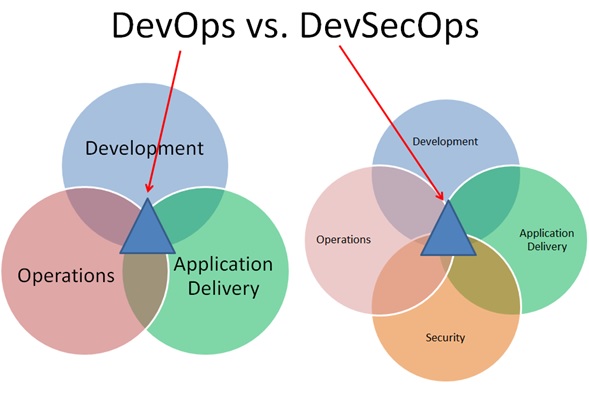
Image: DevOps vs DevSecOps Mginise — Mginise (CC BY-SA 4.0), via Wikimedia Commons
Bottom Line
The microservices landscape has stopped being about “just split the monolith”. Modern systems demand rigor in contracts, safety in distributed transactions, foresight in scaling, and zero‑trust at the mesh level—all while keeping teams productive through declarative pipelines and observability‑driven feedback. By adopting the seven patterns outlined above, senior engineers can future‑proof their platforms, reduce operational toil, and deliver business value at the speed that today’s markets expect.
Sources & References:
1. “Microservices Design Patterns”, 2025 edition, O'Reilly Media.
2. Istio Documentation, version 2.8, 2026.
3. Temporal.io – SaaS‑Scale Saga Orchestration Whitepaper, 2026.
4. CNCF Observability Landscape Survey, 2025.
5. “Zero‑Trust Service Mesh” – Linkerd Blog, March 2026.
Disclaimer: This article is for informational purposes only. Technology landscapes change rapidly; verify information with official sources before making technical decisions.