
I remember the first time someone mentioned Kubernetes to me at a tech conference three years ago. My immediate reaction was confusion – what kind of name is that, and why does everyone seem so excited about it? Fast forward to today, and I can't imagine managing containerized applications without it.
If you're feeling similarly confused about Kubernetes (often shortened to K8s), you're not alone. As someone who's spent 15 years in the trenches of software engineering, I've watched countless technologies come and go. But Kubernetes isn't just another buzzword – it's fundamentally reshaping how we build and deploy applications at scale.

What Is Kubernetes and Why Should You Care?
Kubernetes, also known as K8s, is an open source system for automating deployment, scaling, and management of containerized applications. Think of it as the conductor of an orchestra – while individual containers are like musicians, Kubernetes ensures they all play in harmony to create a beautiful symphony.
The numbers tell a compelling story about its meteoric rise. Kubernetes production deployment reached 80% in 2024, marking a 20.7% increase from the previous year's 66%. Even more striking, 93% of organizations now use, pilot, or evaluate Kubernetes for container orchestration. This isn't just a trend – it's becoming the new standard for how modern applications are deployed and managed.
Originally developed by Google and building upon 15 years of experience of running production workloads at Google, Kubernetes has evolved into the de facto standard for container orchestration. Designed on the same principles that allow Google to run billions of containers a week, Kubernetes can scale without increasing your operations team.
The Core Benefits That Drive Adoption
Having implemented Kubernetes across multiple organizations, I've seen firsthand why teams become evangelical about it. The benefits aren't just theoretical – they translate into real business value.
Scalability That Actually Works: Scale your application up and down with a simple command, with a UI, or automatically based on CPU usage. Kubernetes can automatically scale up the number of web server pods to handle the increased load. If a web server pod crashes, Kubernetes will automatically restart it. This automation helps the website remain responsive and available, even during peak traffic periods.
Resource Optimization: By efficiently packing containers onto nodes and auto-scaling resources, Kubernetes improves utilization and reduces infrastructure spend. Workloads scale down when idle, ensuring you only pay for what you use. This isn't just about saving money – it's about doing more with less.
Self-Healing Capabilities: It provides high availability through its self-healing capabilities, automatically replacing failed containers and redistributing workloads. When something breaks (and it will), Kubernetes doesn't wait for you to notice – it fixes itself.
Portability: Kubernetes is open source giving you the freedom to take advantage of on-premises, hybrid, or public cloud infrastructure, letting you effortlessly move workloads to where it matters to you. This flexibility becomes invaluable when business requirements change or when optimizing costs across different cloud providers.
Understanding the Complexity Challenge
Let's be honest about something the marketing materials often gloss over: Kubernetes is complex. Complexity challenges being the number one reason organisations struggle to adopt cloud-native practices, including Kubernetes.
The data backs this up. According to the D2iQ study, the most significant challenges enterprises encountered during Kubernetes adoption were security risks (47%), poor scalability (37%), and inadequate IT resources (34%). Security concerns are particularly troubling – 67% of respondents have delayed or slowed down deployment of container-based applications due to security concerns.
The learning curve is steep. Kubernetes offers unprecedented control over containerized workloads, but this power comes with significant operational overhead. Organizations often underestimate the learning curve, operational complexity, and resource requirements needed to successfully implement and maintain a Kubernetes environment.
But here's the thing – complexity isn't inherently bad if it solves complex problems. As one expert put it, "There's always going to be a member of your team interested in the details of Kubernetes. … And being able to create abstractions in a way that's tailored to your enterprise [is certainly preferable to] throwing your hands up because Kubernetes has a lot of features."
Assessing Your Team's Readiness
The most common mistake I see organizations make is jumping into Kubernetes without properly assessing their readiness. The decision to adopt Kubernetes shouldn't be driven by industry hype or competitor actions. Instead, it should be based on a careful analysis of your organization's specific needs, capabilities, and strategic goals.
Here are the key factors to evaluate:
Team Expertise and Resources: The proactive retraining and upskilling of employees that will be tasked with running and maintaining the operationally composite Kubernetes technology. Despite the relative immaturity of containers; the availability of IT professionals and an acute scarcity of container skills still remain inhibitors to adoption.
Application Architecture: Kubernetes shines with microservices architectures but can be overkill for monolithic applications. If you're running traditional monolithic applications, you might want to consider containerization and possibly breaking them down before diving into Kubernetes.
Organizational Alignment: The lack of internal alignment for optimal decision-making when selecting a Kubernetes distribution was among the key challenges to Kubes adoption. According to the VMware report, 40% of the respondents noted a lack of internal alignment as the key problem when adopting Kubernetes.
Collaboration Between Teams: The challenge with adopting Kubernetes is that the Enterprise IT and Application Development groups must rethink how they work together. Traditionally, IT and development did not require a high degree of collaboration. Enterprise IT focused on cost and operational efficiency, while Application Development focused on developer productivity.
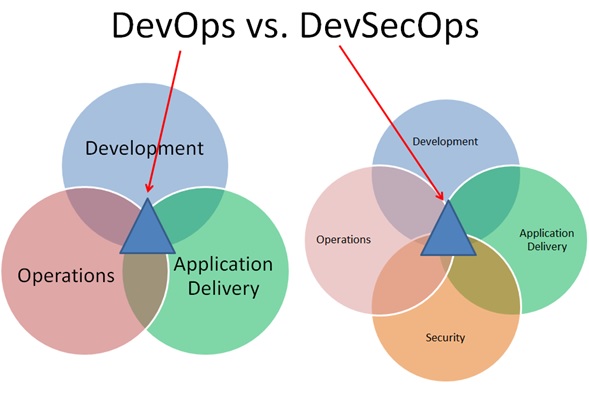
Image: DevOps vs DevSecOps Mginise — Mginise (CC BY-SA 4.0), via Wikimedia Commons
Strategic Implementation Approaches
If you've assessed your readiness and decided to move forward, here's how to do it right:
Start Small and Build Gradually: Complete the Readiness Assessment: Use the frameworks provided in this article to evaluate your organization's Kubernetes readiness across all dimensions. Start Small: Begin with non-critical applications or development environments to build expertise and confidence. Invest in Education: Allocate budget and time for team training, certifications, and conference attendance. Build Gradually: Implement Kubernetes capabilities incrementally, starting with basic container orchestration and adding advanced features over time.
Enforce Standardization: Enforce standardization at the cluster and team levels. Every cluster your enterprise provisions ought to start from the same template, script, or automation pipeline, and your devs shouldn't deviate from approved baselines. Another way to put this is that your teams should never have to write their own scripts to set up or operate new clusters.
Build Internal Platforms: I usually advise building an internal IT service catalog or marketplace that accommodates devs' need to create, manage, and maintain clusters. Your teams must be able to use these tools easily by logging in to a convenient visual portal, picking their preferred k8s parameters, and deploying with minimal hassle.
Focus on Automation: Automation is a cornerstone of most successful k8s adoptions because it augments your ability to support typical development and deployment tasks. There's a huge difference, however, between simply automating things and being able to orchestrate containerized applications well.
Real-World Success Stories
The proof is in the pudding – or in this case, in the production deployments. JPMorgan Chase adopted Kubernetes incrementally, starting with development environments and gradually moving to production over 18 months, ultimately managing over 150,000 containers.
Spotify, the popular audio streaming service provider, uses Kubernetes to manage its services. During peak times, like when a new album is released, Spotify can quickly increase its resources to handle millions of listeners without any interruptions. This scalability helps Spotify maintain a smooth experience for over 400 million users worldwide.
Adidas uses Kubernetes to manage its applications across multiple clouds, optimizing costs and performance. By using a container orchestration platform, Adidas improved its deployment speed by 50%, enabling the brand to respond quickly to market changes.
These aren't just tech companies showing off – these are real businesses solving real problems with tangible results.
The Security and Cost Reality Check
Let's talk about the elephant in the room: security concerns. The statistics are sobering. 46% of respondents also revealed that their organization experienced revenue or customer loss as a result of a security incident. Even more concerning, 26% of respondents said that a security incident led to employee termination, while 30% reported that their organization was fined as a result of the incident.
But here's what the data also shows: 48% report that their organization understands the value of DevSecOps and is in the early stages of adoption, with development, operations, and security teams collaborating on joint policies and workflows. This is a significant increase from 2023, when only 39% of respondents were at this stage.
The key insight? Security isn't a Kubernetes problem – it's a process and culture problem. Organizations that treat security as an afterthought will struggle regardless of their orchestration platform.
On the cost side, while Kubernetes can reduce infrastructure costs through better resource utilization, operational challenges—especially around security and compliance—can quickly erode these savings. Reports show delays and unexpected costs often arise from misconfigurations or weak governance.
When NOT to Choose Kubernetes
Sometimes the best engineering decision is knowing when not to use a technology. Kubernetes isn't right for every situation:
• Simple applications: If you have a straightforward web application that doesn't need to scale beyond a few instances, Kubernetes might be overkill
• Small teams without DevOps experience: The operational overhead might outweigh the benefits
• Tight budgets with limited time: The learning curve and setup time require significant investment
• Applications with simple scaling needs: If your scaling requirements are predictable and modest, simpler solutions might suffice
Not every organization that adopts Kubernetes sees immediate benefits, and some discover that simpler alternatives would have better served their needs.
The Bottom Line
Kubernetes represents a fundamental shift in how we think about application deployment and management. The global application container market reached $5.85 billion in 2024. Market projections indicate growth to $31.50 billion by 2030, representing a compound annual growth rate of 33.5%. This isn't a fad – it's the future of infrastructure.
But success with Kubernetes isn't guaranteed just by adoption. Kubernetes offers unmatched scalability and flexibility, but it introduces significant operational complexity. Successful adoption requires planning for the challenges of security, compliance, and resource management from the very beginning.
The organizations winning with Kubernetes share common characteristics: they start small, invest in education, enforce standards, and treat it as a long-term strategic initiative rather than a quick fix. They understand that the best architecture is the one that your team can successfully build, deploy, and maintain while meeting your business objectives. Choose wisely, start small, and iterate toward success.
If you're considering Kubernetes, don't rush. Assess your readiness, prepare your team, and remember that the goal isn't to use the coolest technology – it's to solve real business problems efficiently and reliably. In the right hands, with the right preparation, Kubernetes can be transformational. Without proper planning, it can become an expensive distraction.
The choice is yours, but now you have the information to make it wisely.
Sources & References:
Red Hat — State of Kubernetes Security Report, 2024
Cloud Native Computing Foundation — Annual Survey, 2024
D2iQ — Kubernetes Adoption Study, 2024
Gartner — Cloud Survey on Kubernetes Adoption Trends, 2024
VMware — State of Kubernetes Report, 2024
Disclaimer: This article is for informational purposes only. Technology landscapes change rapidly; verify information with official sources before making technical decisions.