
Kubernetes has revolutionized how we deploy and manage applications, but it's also introduced new challenges around cost management. Organizations overspend by dropping more than $1 million each month on cloud bills in many cases, with average CPU utilization across Kubernetes clusters remains low at just 10%, down from 13% last year, while memory utilization is 23%. However, companies implementing comprehensive cost optimization strategies routinely achieve 30-50% reductions in their Kubernetes spending, proving that substantial savings are possible with the right approach.

Understanding the Scale of Kubernetes Cost Waste
The financial implications of unoptimized Kubernetes deployments are staggering. 70% of respondents cited over-provisioning as a top issue, easily leading the way as the top cause of overspending, according to recent CNCF research. For clusters containing 50 or more CPUs, organizations only utilize 13 percent of provisioned CPUs, and just 20 percent of memory, on average.
The problem compounds at scale. Companies with more than 1,000 nodes could reduce their wasted resources by $10M per year by addressing these fundamental inefficiencies. This waste isn't just theoretical—only 13% of provisioned CPUs and 20% of memory were actually used in clusters with over 50 CPUs. That means a huge chunk of resources sits idle, yet you're still footing the bill for all of it.
Beyond over-provisioning, other significant cost drivers include:
- 45% named a lack of individual or team-level responsibility for cloud costs
- 43% of respondents: Sprawl (such as resources not deactivated after use) and technical debt from existing workloads
- 38% of respondents confessed that they have no Kubernetes cost monitoring in place
Resource Right-Sizing: The Foundation of Cost Optimization
Resource right-sizing represents the most immediate opportunity for cost reduction in Kubernetes environments. Rightsizing involves adjusting your CPU and memory resources allocation to match the actual usage requirements of your applications. This can not only improve overall efficiency but also help you ensure that your apps have the resources required to perform optimally.
The challenge lies in the disconnect between requests, limits, and actual usage. Many developers set resource requests conservatively high to avoid performance issues, but this leads to systematic waste. Many developers don't have access to detailed usage patterns when deploying an app. So, they make rough estimates for CPU and memory, often erring on the side of safety. These guesses might work temporarily, but can easily result in long-term waste.
Effective right-sizing requires:
- Historical Analysis: Review actual resource consumption patterns over weeks or months
- Workload Profiling: Understand peak vs. average usage for different application components
- Gradual Optimization: Implement changes incrementally to validate performance impact
- Automated Recommendations: Use tools that analyze usage patterns and suggest optimal resource settings
One third of organizations still lack container rightsizing, according to the 2024 Kubernetes Benchmark Report, indicating significant room for improvement across the industry.
Leveraging Spot Instances for Maximum Savings
Spot instances represent one of the most powerful cost optimization tools available to Kubernetes operators. By using spare cloud capacity at steep discounts, commonly 50–90% off depending on region and instance family, you can run the same workloads for just a fraction of the cost.
The financial impact is substantial. Clusters with a mix of On-Demand and Spot Instances recorded an average savings of 59%, while clusters running only Spot Instances scored a 77% reduction on average. Clusters that partially leverage Spot Instances achieve an average compute cost reduction of 59%, while those running exclusively on Spot Instances see an even greater cost reduction of 77%.
To illustrate the savings potential: A cluster running 100 m5.large instances on-demand costs about $6,912 per month. With typical spot discounts of 70–90%, the same capacity would cost roughly $691–$2,074 per month. Scale that across your entire infrastructure, and you're talking about hundreds of thousands in annual savings.
Successful spot instance implementation requires:
- Workload Classification: Identify fault-tolerant applications suitable for spot instances
- Mixed Node Pools: Combine spot and on-demand instances for optimal cost-reliability balance
- Diversification: Spreading spot instances across multiple availability zones reduces the risk that a single reclaim event impacts too much of your capacity at once. Different AZs have independent spot pricing and availability
- Graceful Handling: Implement proper termination handling and pod disruption budgets
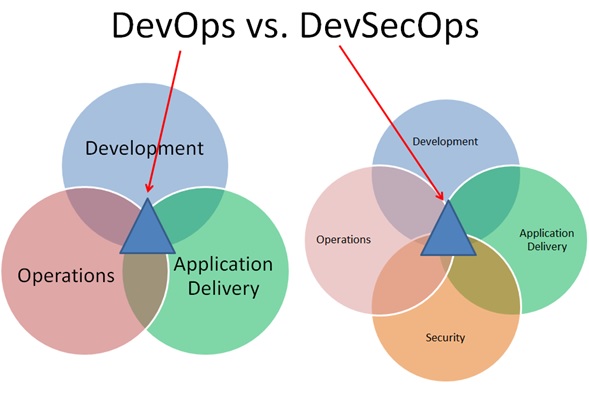
Image: DevOps vs DevSecOps Mginise — Mginise (CC BY-SA 4.0), via Wikimedia Commons
Implementing Effective Autoscaling Strategies
Proper autoscaling is crucial for maintaining cost efficiency while ensuring application performance. Monitoring your Kubernetes environment is the first and most critical step in cost optimization. Without proper monitoring, it's nearly impossible to know how resources are being consumed or where costs are accumulating.
Kubernetes offers several autoscaling mechanisms:
Horizontal Pod Autoscaler (HPA): Automatically scales the number of pods based on CPU, memory, or custom metrics. This prevents over-provisioning during low-traffic periods while ensuring adequate capacity during spikes.
Vertical Pod Autoscaler (VPA): The Vertical Pod Autoscaler (VPA) optimizes individual pod resources by analyzing historical usage patterns. It automatically adjusts CPU and memory requests/limits based on the recommendations provided by VPA. This helps prevent resource waste from over-provisioning.
Cluster Autoscaler: Manages node count by adding nodes when pods can't be scheduled and removing nodes when they're underutilized. This ensures you're not paying for idle infrastructure capacity.
Context-Aware Scaling: Not all Kubernetes workloads are the same. Batch jobs, stateless APIs, and real-time streaming services each exhibit different usage patterns and performance requirements. Applying the same scaling or resource provisioning logic to every workload can lead to inefficiencies or performance degradation. Context-aware optimization addresses this by tailoring resource management to the unique characteristics of each workload.
Establishing FinOps Culture and Accountability
Technical optimization alone isn't sufficient for sustained cost control. FinOps — instilling shared cost responsibility across an organization — is a common objective for businesses needing more effective cloud and Kubernetes cost controls. Ninety-eight percent of respondents cited the importance of engineer, developer and product team involvement in cost controls and increased attentiveness to spending. Organizations are optimistic: 75% expect to achieve full buy-in from these teams as active and effective cloud budget hawks.
Effective FinOps implementation in Kubernetes requires:
Cost Visibility: Make sure you can report your Kubernetes usage costs to the finance teams as well as distribute usage costs to developers so you can track metrics to demonstrate savings over time. Teams need clear visibility into how their deployment decisions impact costs.
Chargeback and Showback: Cost showback requires reporting usage costs back to the teams or departments responsible for building and maintaining the apps and services consuming the cloud spend. The transparency provided by cost showbacks encourages accountability, helping teams understand their impact on the overall budget and motivating them to optimize resource usage as needed.
Policy Enforcement: Implement guardrails through admission controllers and resource quotas to prevent cost-inefficient deployments from reaching production.
Education and Training: 68% of respondents see advantages in making teams and individuals more aware of the need for spending discipline. 58% agreed that improved collaboration and communication on consumption and spending would rein in costs. Another 58% saw value in honing best practice blueprints that individuals and teams could consistently follow.
Monitoring and Tooling for Continuous Optimization
Successful Kubernetes cost optimization requires sophisticated monitoring and analysis capabilities. Kubernetes cost optimization is a continuous process that requires diligent monitoring, proactive management, and the right platforms.
Essential monitoring capabilities include:
Resource Utilization Tracking: Monitor actual CPU, memory, and storage consumption across clusters, namespaces, and individual workloads to identify optimization opportunities.
Cost Attribution: Kubecost delivers detailed insights into Kubernetes spend across clusters, namespaces, and workloads. It's ideal for teams that need granular cost attribution and chargeback models.
Anomaly Detection: Implement alerting for unusual spending patterns or resource consumption that could indicate misconfigured or runaway workloads.
Capacity Planning: Gather metrics about how much of your cost and usage is spent on idle capacity, shared vs. app-specific resources, and the effectiveness of node scaling. This lifecycle data can help you realize cost savings. To get accurate, usage-based cost data across your business to share with procurement, integrate your cloud bill and related pricing.
Popular tools for Kubernetes cost optimization include:
- Kubecost: Provides detailed cost breakdowns and optimization recommendations
- AWS Cost Explorer: Offers native cost analysis for EKS deployments
- Prometheus + Grafana: Open-source monitoring stack for resource utilization tracking
- Commercial Platforms: Solutions like Cast AI, ScaleOps, and CloudZero offer automated optimization capabilities
Advanced Optimization Techniques
Kubernetes: cluster overallocation and conservative requests/limits lead to 20–30% resource headroom not consumed in steady state. Serverless: less waste from idle capacity, but hidden cost creep via over-invocation, cold starts, and verbose logging can add 1–3%.
Advanced optimization strategies include:
Node Optimization: Rightsizing + auto-scaling programs routinely cut compute waste by 25–35%. Commitment management (reserved instances/savings plans) lowers run-rate by 20–37% when actively maintained.
Storage Optimization: Implement intelligent storage tiering, cleanup of unused persistent volumes, and optimization of snapshot policies to reduce storage costs.
Network Optimization: Data egress & inter-region traffic without routing optimization: 3–6% waste, more in data/AI workloads. Optimize data transfer patterns and implement regional deployment strategies.
Workload Scheduling: Use advanced scheduling techniques like topology spread constraints and inter-pod affinity to improve bin-packing efficiency and reduce the number of required nodes.
Measuring Success and ROI
Effective cost optimization requires clear metrics and regular assessment. Key performance indicators include:
Cost Metrics:
- Total cost of ownership (TCO) per application or service
- Cost per transaction or user
- Month-over-month cost trends
- Resource utilization efficiency ratios
Operational Metrics:
- Application performance and availability during optimization
- Time to scale (both up and down)
- Resource waste reduction percentage
- Spot instance interruption rates and recovery times
Real-world results demonstrate the potential impact. Within three months of adopting Karpenter with Spot Instances, the customer achieved measurable business value: 35% reduction in monthly EC2 spend, with no degradation in application performance. 50% Spot Instance utilization across clusters, up from less than 5% previously. Scaling time reduced from ~5 minutes to <30 seconds.
The Bottom Line
Kubernetes cost optimization is not just about cutting expenses—it's about building a sustainable, efficient infrastructure that can scale with your business needs. 93% of companies are either using it in production, piloting it, or actively evaluating it, and 80% reported running Kubernetes in production in 2024, up from 66% in 2023, reflecting a strong 20.7% year-over-year growth rate. The momentum is undeniable, with Kubernetes adoption projected to grow at a 23.4% CAGR through 2031.
The path to substantial cost savings requires a multi-faceted approach: right-sizing resources based on actual usage patterns, strategically implementing spot instances for fault-tolerant workloads, establishing proper autoscaling mechanisms, and fostering a culture of cost accountability through FinOps practices. Most organizations believe they are "doing okay" when it comes to managing their Kubernetes costs — until they actually start measuring it. Once they begin monitoring real usage, that's when they realize how much waste there actually is.
Success in Kubernetes cost optimization isn't achieved overnight—it's an ongoing process that requires continuous monitoring, regular assessment, and iterative improvement. However, organizations that commit to this journey consistently achieve 30-50% cost reductions while maintaining or improving application performance and reliability.
The key is to start with the fundamentals: establish visibility into your current spending patterns, implement basic right-sizing practices, and gradually expand into more advanced techniques like spot instances and automated optimization tools. Remember, the goal isn't just to cut costs, but to build a more efficient, scalable, and resilient infrastructure that delivers better value for your investment.
Sources & References:
Cast AI — Kubernetes Cost Benchmark Report, 2025
Cloud Native Computing Foundation — Cloud Native and Kubernetes FinOps Microsurvey, 2024
Fairwinds — Kubernetes Benchmark Report: Managing K8s Workload Costs, 2024
Sysdig — Kubernetes Resource Waste Analysis, 2025
InfoQ — CNCF Survey on Kubernetes Overspend, 2024
Disclaimer: This article is for informational purposes only. Technology landscapes change rapidly; verify information with official sources before making technical decisions.