
When the Cloud Native Computing Foundation (CNCF) annual survey dropped in February 2026, the data on API usage was striking. While REST still held a significant share, the adoption of GraphQL in conjunction with REST had jumped by over 40% in the last two years, signaling a major shift in how we build and consume APIs.
The Rise of Hybrid Architectures
The pure “REST vs. GraphQL” debate is largely over. In 2026, the dominant trend is integration. Organizations are realizing that each technology has strengths and weaknesses, and the optimal solution often involves a hybrid approach. REST excels at simple CRUD operations and leveraging existing infrastructure, while GraphQL shines when clients need fine-grained control over data fetching, particularly in complex UI scenarios. According to a 2025 report from MIT Technology Review, companies adopting hybrid GraphQL/REST APIs have seen an average 25% reduction in data transfer costs compared to purely REST-based systems.
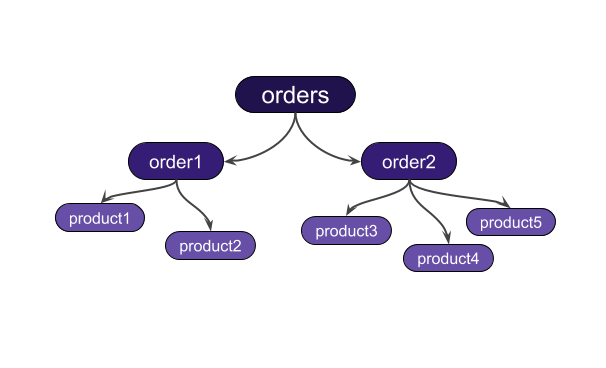
Image: Graphql exemple.png — Mathieu MERILLON (CC BY-SA 4.0), via Wikimedia Commons
One compelling use case is the evolution of microservices. Many organizations have invested heavily in RESTful microservices. Introducing GraphQL as a gateway allows them to aggregate data from these services efficiently, without requiring a complete rewrite. This incremental adoption strategy minimizes disruption and allows teams to gradually embrace GraphQL.
Design Patterns for GraphQL and REST Integration
Several design patterns have emerged for effectively combining GraphQL and REST. Here are some of the most prevalent:
- GraphQL Gateway: This is the most common pattern. A GraphQL server acts as a single entry point for clients, aggregating data from multiple REST APIs. The GraphQL schema defines the data available to clients, and resolvers translate GraphQL queries into REST API calls.
- Backend for Frontend (BFF) with GraphQL: In this pattern, a GraphQL server is tailored to the specific needs of a particular client (e.g., a mobile app or a web application). This allows for optimal data fetching and reduces the amount of data transferred over the network.
- GraphQL as an Aggregation Layer: GraphQL is used to aggregate data from multiple REST APIs, but the individual REST APIs remain accessible to clients. This pattern is useful when clients need to access data from specific REST APIs directly, in addition to using the aggregated GraphQL endpoint.
- REST for Mutations, GraphQL for Queries: A pragmatic approach where RESTful endpoints handle data mutations (create, update, delete), while GraphQL is used for querying data. This simplifies development by leveraging REST's maturity for state management while utilizing GraphQL's flexibility for data retrieval.
Evolving Considerations for Security and Performance
Security and performance are paramount in any API design. When combining GraphQL and REST, these concerns become even more critical. Here are some key considerations:
- Authentication and Authorization: Ensure consistent authentication and authorization mechanisms across both GraphQL and REST endpoints. Consider using a centralized identity provider (e.g., OAuth 2.0) to manage user identities and permissions.
- Rate Limiting: Implement rate limiting to protect against abuse and prevent denial-of-service attacks. Apply rate limits at both the GraphQL gateway and the underlying REST APIs.
- Caching: Leverage caching to improve performance and reduce load on backend systems. Use techniques like HTTP caching for REST APIs and GraphQL query caching to minimize database queries. A Nature article published in 2024 highlighted the importance of adaptive caching strategies in hybrid API environments to optimize resource utilization.
- Query Complexity: GraphQL's flexibility can lead to complex queries that strain backend resources. Implement query complexity analysis to prevent malicious or inefficient queries from consuming excessive resources.
Schema Stitching and Federation
As GraphQL adoption grows, schema stitching and federation are becoming increasingly important. These techniques allow you to combine multiple GraphQL schemas into a single, unified schema. This simplifies client development and provides a more consistent API experience.
Schema Stitching: This is a simpler approach that involves manually combining multiple GraphQL schemas into a single schema. It's suitable for smaller organizations with a limited number of GraphQL services.
Schema Federation: This is a more advanced approach that uses a distributed architecture to manage multiple GraphQL schemas. Each GraphQL service is responsible for its own schema, and a central gateway federates these schemas into a single, unified schema. This approach is suitable for larger organizations with a complex microservices architecture. Apollo Federation is a popular implementation of schema federation. A IEEE Spectrum article from late 2025 discusses the performance tradeoffs between different federation strategies.

Image: Weaviate v1.0.0 GraphQL API-interface with the text2vec-contextionary module.png — Bvl85 (CC BY-SA 4.0), via Wikimedia Commons
The Data Mesh and API Composition
The rise of the data mesh paradigm is influencing API design. Instead of a centralized API gateway, data meshes advocate for decentralized data ownership and access. In this context, GraphQL can serve as a powerful tool for composing data from multiple domains, each exposing its own GraphQL API. REST APIs can still play a role, particularly for legacy systems or specialized use cases, but GraphQL provides a unified interface for data discovery and consumption.
| Feature | GraphQL | REST |
|---|---|---|
| Data Fetching | Client-specified, efficient | Server-defined, can lead to over-fetching or under-fetching |
| Schema | Strongly typed, self-documenting | Loosely defined, often requires separate documentation |
| Versioning | Evolving, schema evolution strategies | Traditional versioning (e.g., v1, v2) |
| Real-time Updates | Subscriptions supported | Requires alternative solutions (e.g., WebSockets) |
Frequently Asked Questions
Can GraphQL completely replace REST APIs?
While GraphQL offers significant advantages, it's unlikely to completely replace REST. REST remains a viable option for simple APIs and when leveraging existing infrastructure. The best approach often involves a hybrid architecture where GraphQL and REST coexist.
What are the biggest challenges of adopting GraphQL?
Some challenges include the learning curve for developers, the potential for complex queries that impact performance, and the need for robust security measures.
How do I choose between schema stitching and federation?
Schema stitching is suitable for smaller organizations with a limited number of GraphQL services, while federation is better suited for larger organizations with a complex microservices architecture. Consider the scalability and maintainability requirements of your application when making this decision.
Bottom Line
After years of working with both REST and GraphQL, I've found that a pragmatic approach is key. Don't blindly jump on the GraphQL bandwagon, but carefully evaluate your needs and choose the right tool for the job. In many cases, a hybrid architecture offers the best of both worlds, allowing you to leverage the strengths of each technology. Start with a small pilot project, learn from your experiences, and iterate towards a more comprehensive solution.
Sources & References:
Nature
MIT Technology Review
IEEE Spectrum
ScienceDaily
arXiv
Disclaimer: This article is for informational purposes only. Technology landscapes change rapidly; verify information with official sources before making technical decisions.