
Serverless Architectures: The New Normal
Serverless computing has matured significantly. No longer just for simple event-driven tasks, serverless platforms now support complex, stateful applications. The key is understanding the limitations and advantages. In 2025, a Nature study showed that serverless functions, when properly architected, can reduce operational costs by up to 40% compared to traditional virtual machine-based deployments. However, cold starts and vendor lock-in remain concerns. Best practices now include: * **Container-based Serverless:** Using container images (like Docker) for serverless functions provides greater portability and control over the execution environment. * **Event-Driven Architectures:** Embrace event-driven principles to decouple services and improve scalability. Message queues (like RabbitMQ or Kafka) are crucial components. * **Observability is Key:** Implement robust monitoring and tracing to understand the performance and behavior of serverless applications. Tools like Prometheus and Jaeger are essential.AI Integration: Architectures for Intelligent Applications
AI is no longer an add-on; it's becoming deeply integrated into cloud applications. This requires architectural considerations to handle the data processing and computational demands of AI models. A MIT Technology Review article highlighted that the demand for AI-optimized cloud infrastructure is growing at an annual rate of over 60%. Best practices for AI integration include: * **GPU-Accelerated Computing:** Utilize cloud providers' GPU instances for training and inference of AI models. Consider specialized hardware like TPUs (Tensor Processing Units) for specific workloads. * **Data Lake Architectures:** Build a centralized data lake to store and process large datasets required for AI training. Cloud-based data lakes like AWS S3 and Azure Data Lake Storage are popular options. * **AI Model Serving:** Employ specialized AI model serving platforms like TensorFlow Serving or TorchServe to deploy and manage AI models at scale. These platforms provide features like versioning, monitoring, and A/B testing.
Image: Cloud Computing Architecture.jpg — Hiren Tat (CC BY-SA 4.0), via Wikimedia Commons
Security: Zero Trust and Quantum Resistance
Security remains paramount in cloud architecture. The Zero Trust security model, which assumes that no user or device is trusted by default, is becoming increasingly important. Furthermore, the threat of quantum computers breaking existing encryption algorithms necessitates a shift towards quantum-resistant cryptography. A 2024 report by ScienceDaily indicated that successful quantum attacks on widely used encryption algorithms could occur within the next 5-10 years. Key security best practices include: * **Identity and Access Management (IAM):** Implement strong IAM policies to control access to cloud resources. Use multi-factor authentication (MFA) and least privilege principles. * **Network Segmentation:** Segment the network to isolate sensitive workloads and limit the impact of potential breaches. Use firewalls and network security groups to control traffic flow. * **Data Encryption:** Encrypt data at rest and in transit. Use key management services (KMS) to securely store and manage encryption keys. Begin migrating to quantum-resistant cryptographic algorithms. * **Runtime Application Self-Protection (RASP):** Employ RASP solutions to detect and prevent attacks on running applications in real-time.Cost Optimization: Fine-Grained Resource Management
Cloud costs can quickly spiral out of control if not properly managed. Best practices for cost optimization involve fine-grained resource management and continuous monitoring. In 2023, Gartner estimated that over 70% of cloud spending is wasted due to inefficient resource utilization. Key strategies include: * **Right-Sizing Instances:** Continuously monitor resource utilization and right-size instances to match workload demands. Use auto-scaling to dynamically adjust resources based on traffic patterns. * **Spot Instances:** Utilize spot instances for non-critical workloads to take advantage of significant cost savings. Spot instances are spare compute capacity offered at discounted prices. * **Storage Tiering:** Implement storage tiering to move infrequently accessed data to cheaper storage tiers. Cloud providers offer various storage tiers with different cost and performance characteristics. * **Cost Monitoring and Analysis:** Use cloud provider's cost monitoring tools to track spending and identify areas for optimization. Implement cost alerts to notify you of unexpected spikes in spending.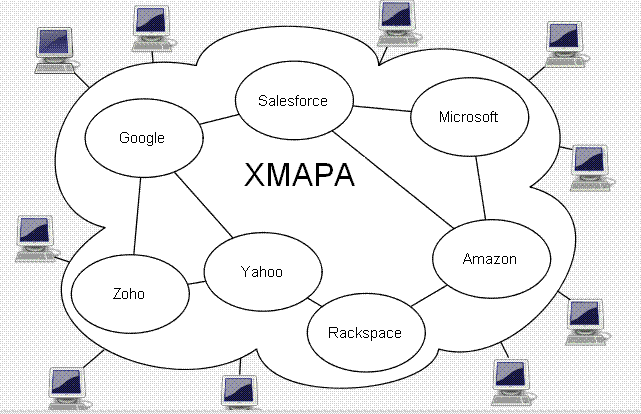
Image: Cloud computing-uk.png — Cloud_computing.svg: Sam Johnston derivative work: A1 (talk) (CC BY-SA 3.0), via Wikimedia Commons
## Multi-Cloud and Hybrid Cloud Strategies: Embracing Flexibility Many organizations are adopting multi-cloud or hybrid cloud strategies to avoid vendor lock-in, improve resilience, and optimize costs. This involves distributing workloads across multiple cloud providers or combining cloud resources with on-premises infrastructure. Architectural considerations for multi-cloud and hybrid cloud include: * **Containerization:** Use containerization (e.g., Docker, Kubernetes) to ensure portability of applications across different cloud environments. * **Infrastructure as Code (IaC):** Implement IaC using tools like Terraform or CloudFormation to automate the provisioning and management of infrastructure across multiple clouds. * **Centralized Management:** Use a centralized management platform to monitor and manage resources across all cloud environments. This provides a single pane of glass for visibility and control.| Best Practice | Description | Benefit |
|---|---|---|
| Container-based Serverless | Using container images for serverless functions. | Improved portability and control. |
| GPU-Accelerated Computing | Utilizing GPU instances for AI workloads. | Faster AI model training and inference. |
| Zero Trust Security | Assuming no user or device is trusted by default. | Enhanced security posture. |
| Right-Sizing Instances | Matching instance size to workload demands. | Reduced cloud costs. |
| Infrastructure as Code | Automating infrastructure provisioning and management. | Improved efficiency and consistency. |
Frequently Asked Questions
How do I choose the right cloud provider?
Consider your specific needs and requirements. Evaluate factors like pricing, performance, security, and available services. Consider a multi-cloud strategy to avoid vendor lock-in.
What is the best way to secure my cloud environment?
Implement a Zero Trust security model, encrypt data at rest and in transit, and use strong identity and access management policies. Stay up-to-date on the latest security threats and vulnerabilities.
How can I optimize my cloud costs?
Right-size instances, utilize spot instances, implement storage tiering, and continuously monitor your cloud spending. Use cloud provider's cost management tools to identify areas for optimization.
Bottom Line
The cloud landscape is constantly evolving, and staying ahead of the curve requires continuous learning and adaptation. In 2026, the key to successful cloud architecture lies in embracing serverless computing, integrating AI seamlessly, prioritizing security, optimizing costs, and adopting multi-cloud strategies. Based on my experience, I highly recommend starting with a pilot project to experiment with new technologies and best practices before implementing them across your entire organization. Don't be afraid to fail fast and learn from your mistakes.Sources & References:
Nature
MIT Technology Review
ScienceDaily
IEEE Spectrum
arXiv
Disclaimer: This article is for informational purposes only. Technology landscapes change rapidly; verify information with official sources before making technical decisions.