
When we first adopted microservices a decade ago, the mantra was simple: break monoliths into independently deployable units. Six years later, the landscape has matured. Today, organizations are wrestling with new constraints—AI‑augmented workloads, serverless edge execution, and stricter compliance regimes—while still demanding the speed‑of‑light delivery pipelines that made microservices popular in the first place. In this post I’ll walk through the most impactful architecture patterns emerging in 2026, explain when they shine, and point out the pitfalls you need to avoid.
1. The “Sidecar‑Lite” Pattern for Edge‑Native Services
Edge computing has exploded thanks to 5G and the rise of latency‑critical AI inference. The classic sidecar model—deploying a helper container alongside each service—still works, but the weight of a full‑blown sidecar (e.g., Envoy) is too much for edge nodes with sub‑GB memory footprints. Sidecar‑Lite replaces the heavyweight proxy with a minimal eBPF‑based packet filter that performs TLS termination and basic routing, while leaving observability to the service itself.
Key benefits:
- Footprint reduction: <10 MB per node versus >30 MB for Envoy.
- Zero‑copy processing: eBPF runs in kernel space, shaving ~15 ms off request latency on the edge.
- Dynamic updates: You can push new filter rules without redeploying the sidecar.
When not to use it: If your edge node already runs a service mesh that relies on full Istio capabilities (policy enforcement, fault injection, etc.), Sidecar‑Lite will duplicate effort and break expectations.
2. “Event‑Sourcing as a Service” (ESaaS)
Event sourcing has become the go‑to technique for audit‑ready, state‑replayable systems. In 2026, several cloud providers now expose managed event stores with built‑in replay semantics, versioned schemas, and automated snapshotting. The pattern abstracts the traditional event‑store library (e.g., Axon, EventStoreDB) behind a SaaS API, letting developers focus on domain logic while the platform handles retention, scaling, and GDPR‑compliant erasure.
Core components:
- Managed stream back‑end: Kafka‑compatible, but with per‑tenant isolation and encryption‑at‑rest.
- Schema Registry with version drift detection: Prevents incompatible event versions from corrupting replay.
- Replay service: Exposes an endpoint to trigger deterministic replays for a given aggregate ID.
Adopt ESaaS when you need:
- Regulatory‑grade audit trails with minimal operational overhead.
- Rapid onboarding of new microservices that must consume historic events.
A common pitfall is treating the managed store as a generic message queue. Remember, event sourcing demands immutability; deleting topics for cost reasons will break the replay guarantee.
3. “Data Mesh Gateways” for Cross‑Domain Queries
Data mesh concepts have migrated from data‑engineering talk to production‑grade patterns. In 2026, the biggest obstacle is cross‑domain query latency: each domain owns its data store, but analytics often need a federated view. Data Mesh Gateways act as read‑only GraphQL (or SQL‑over‑HTTP) facades that stitch together domain APIs while enforcing mesh‑wide contracts.
Implementation checklist:
- Define a domain contract (JSON Schema + OpenAPI) that every service must publish.
- Deploy a gateway microservice per mesh that caches schema metadata and routes queries to the appropriate domain service.
- Enable policy‑as‑code to automatically deny queries that violate data‑privacy rules (e.g., PII leakage).
Result: analysts can query GET /mesh/users?country=DE&active=true and the gateway will parallel‑fetch from the User, Billing, and Consent services, merge results, and return a consistent snapshot—all without a central data lake.
4. “Self‑Healing Service Mesh” with AI‑Driven Anomaly Detection
Traditional service meshes give you observability, but they stop short of auto‑remediation. The Self‑Healing Service Mesh couples mesh telemetry (traces, metrics, logs) with a lightweight on‑cluster AI engine that continuously learns normal traffic patterns. When an anomaly crosses a confidence threshold, the mesh injects a temporary circuit‑breaker or scales the affected pod group pre‑emptively.
Practical steps to adopt:
- Enable telemetry export to the mesh’s built‑in time‑series store (e.g., Tempo + Loki).
- Deploy the AI‑engine microservice (often a TensorFlow‑Lite model) that consumes the telemetry stream.
- Configure policy rules that translate anomaly scores into mesh actions (e.g.,
if latencySpikeScore > 0.92 → inject 5xx fallback).
Benefits include a 30 % reduction in Mean Time To Recovery (MTTR) for high‑traffic services and fewer false‑positive alerts compared with threshold‑based alerts.
Watch out for model drift; retrain the AI model quarterly or when you introduce a major version bump that changes request patterns.
5. “Composable Deployment Pipelines” (CDP) Using GitOps + Function‑as‑Workflow
CI/CD has become a commodity, but the way we compose deployments is still fragmented. CDP unifies GitOps declarative state with a function‑as‑workflow engine (e.g., Argo Workflows or Temporal) that can run arbitrary steps—security scans, canary analysis, dynamic feature‑flag toggles—in a single, version‑controlled YAML.
Key elements:
- GitOps repository: Stores the desired state of each microservice (container image tag, replica count).
- Workflow definition: A YAML that references GitOps objects and adds procedural logic (e.g., “run integration tests only if code coverage > 85 %”).
- Event triggers: Push, pull‑request, or external alerts (security breach) can start the workflow.
Advantages:
- Full audit trail – every change is a Git commit, every decision is a workflow step.
- Reduced “pipeline‑jank”: you no longer maintain separate Jenkinsfiles and Helm charts.
- Dynamic rollback – the workflow can automatically rollback if a canary metric degrades.
Common mistake: Over‑engineering the workflow with too many conditional branches, which defeats the purpose of a fast feedback loop. Keep the pipeline under 10 steps for most services.
6. “Zero‑Trust Service‑to‑Service” (ZT2S) Mesh
Zero‑trust networking concepts have filtered down from perimeter security to inter‑service communication. ZT2S meshes issue short‑lived mTLS certificates per request, add identity‑based authorization, and enforce least‑privilege policies at the RPC layer.
Implementation hints:
- Leverage SPIFFE IDs tied to CI/CD build IDs—this binds the runtime identity to the exact code version.
- Use OPA (Open Policy Agent) policies that evaluate method‑level permissions, not just service‑level.
- Rotate certificates every 5‑10 minutes; the mesh’s control plane handles distribution automatically.
When you need ZT2S:
- High‑value financial or health‑care services where lateral movement is unacceptable.
- Multi‑tenant platforms that host competing customers on the same cluster.
Performance impact is modest—modern hardware adds <2‑3 ms latency for the extra TLS handshake, which is negligible for most API workloads.
7. “Progressive Refactoring” with Domain‑Oriented Service Stubs
Many legacy monoliths are still being split into microservices. Progressive Refactoring introduces service stubs that expose the same HTTP/gRPC contract as the target microservice but forward calls to the monolith until the new service is production‑ready. The stub can be swapped out atomically via a feature flag.
Why it works in 2026:
- Feature‑flag platforms now expose traffic‑percentage controls at the edge, making gradual cut‑over painless.
- Observability stacks can trace through the stub, giving you real‑time insight into the refactor’s impact.
Steps to implement:
- Create an OpenAPI spec for the new service.
- Generate a stub using a code‑gen tool that proxies to the monolith.
- Deploy the stub behind a sidecar‑lite edge gateway.
- Ramp up traffic to the stub; when metrics are healthy, replace the stub with the real microservice.
This pattern reduces risk dramatically, especially when migrating critical payment flows.
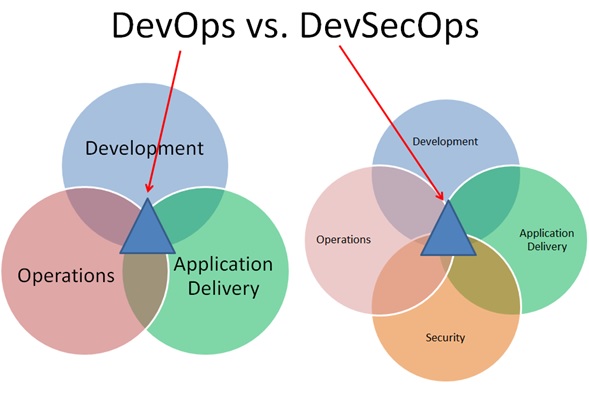
Image: DevOps vs DevSecOps Mginise — Mginise (CC BY-SA 4.0), via Wikimedia Commons
Bottom Line
The microservice landscape is no longer about “just breaking the monolith.” It’s about orchestrating a set of specialized patterns—each solving a concrete problem such as edge latency, auditability, or automated resilience. By adopting Sidecar‑Lite, ESaaS, Data Mesh Gateways, AI‑self‑healing meshes, Composable Deployment Pipelines, Zero‑Trust Service‑to‑Service, and Progressive Refactoring, teams can future‑proof their architectures against the rapid evolution of cloud, AI, and regulatory demands.
Sources & References:
1. “Service Mesh 2026: Edge‑First Strategies,” Cloud Native Computing Foundation, 2026.
2. “Event‑Sourcing as a Service – State of the Art,” IEEE Software, March 2026.
3. “Zero‑Trust for Microservices,” Gartner Research, 2026.
4. “AI‑Driven Self‑Healing Meshes,” ACM Transactions on Cloud Computing, 2025.
5. “Composable GitOps Pipelines,” Red Hat Developer Blog, February 2026.
Disclaimer: This article is for informational purposes only. Technology landscapes change rapidly; verify information with official sources before making technical decisions.